Field Edges Reclaimed Before They Block Equipment
Brush Mowing in Random Lake for overgrown fence lines, field perimeters, and drainage ditches that limit usable acreage
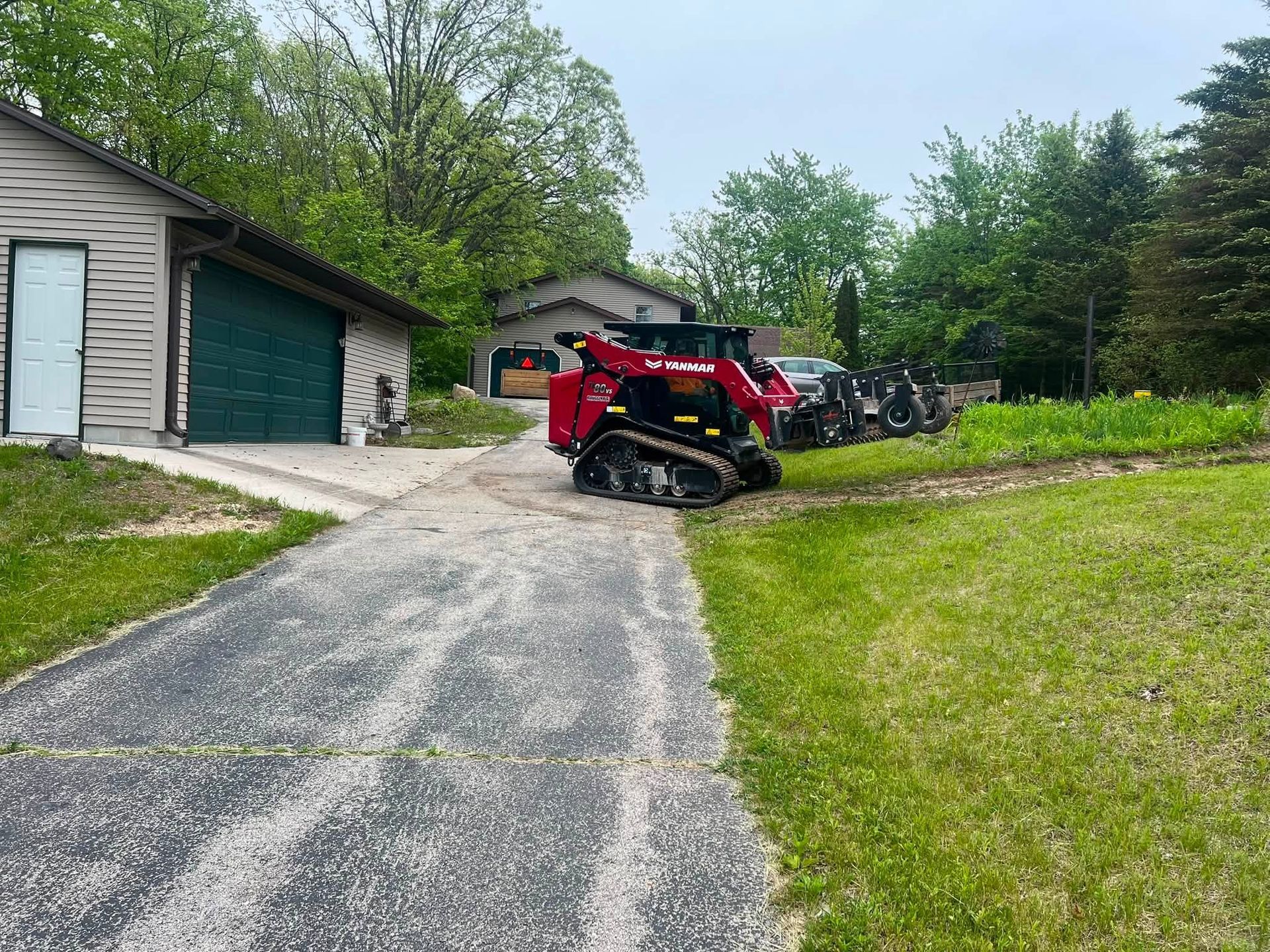
Sheboygan County's rural field edges and fence lines reclaim themselves fast after a wet growing season, and that regrowth blocks equipment access, hides fencing damage, and reduces usable acreage on agricultural and rural-residential properties. Brush mowing cuts overgrown vegetation down to ground level, exposing what lies underneath and opening land for grazing, development, or further clearing work. Schmitt Land Management LLC handles brush mowing across Random Lake, Adell, Waldo, Kewaskum, and farm-adjacent properties throughout the Lakeshore region, using brush mowing both as a standalone service for seasonal vegetation control and as a first-pass step before land clearing or excavation begins.
Brush mowing is mechanical cutting of dense growth—saplings, tall grass, brambles, and scrub brush—that standard mowing equipment can't handle. The work opens sight lines along property boundaries, clears drainage ditches so water flows properly, and prepares field perimeters for fencing or equipment movement. Used as part of a sequenced clearing approach, brush mowing exposes hidden stumps, surface rock, old fence posts, and drainage patterns before heavier equipment moves in for stump grinding or grading.
Arrange a site visit to confirm which areas need mowing and whether the work is standalone vegetation control or part of a larger clearing project.
What Brush Mowing Actually Accomplishes
Mowing cuts everything above ground level but leaves roots in place, so regrowth will occur unless stumps are ground or herbicide is applied after mowing. The service works well for seasonal maintenance on fence rows, roadside edges, and drainage ditches where keeping vegetation low is the goal, and it works as a preparation step when you need to see what's on the ground before digging, clearing, or building.
After mowing, you'll see open ground with vegetation cut flush, clear sight lines along fence rows and field edges, and improved drainage flow through ditches that were choked with growth. The work doesn't remove stumps, roots, or subsurface obstacles, but it reveals them so decisions about grinding, grading, or further clearing can be made based on what's actually there. Across rural Sheboygan County properties, mowing also reduces tick and rodent habitat along field perimeters and creates firebreaks where dry vegetation posed a seasonal risk.
Mowing doesn't replace land clearing if your goal is permanent removal—roots and stumps left in place will resprout within a growing season. Some property owners schedule annual or biannual mowing to keep edges controlled without investing in full stump removal, while others use mowing as a first step before clearing, fencing, or expanding pasture acreage. Cut material is left on-site to decompose unless raking or removal is requested separately.
Questions Before Starting Your Project
Brush mowing questions focus on regrowth, when to schedule, and how the work fits into larger land management plans.
What types of vegetation does brush mowing handle?
Equipment cuts saplings up to several inches in diameter, tall grass, brambles, scrub brush, and dense weed growth that standard lawn mowers or string trimmers can't manage. Larger trees require chainsaw work or land clearing rather than mowing.
How quickly does mowed vegetation grow back in Random Lake?
Regrowth speed depends on species, season, and rainfall—after a wet spring or summer, expect noticeable regrowth within weeks unless stumps are ground or herbicide is applied. Mowing controls height but doesn't eliminate root systems, so repeat mowing or clearing is often necessary for long-term control.
When should I schedule brush mowing during the year?
Late spring through fall works best when ground is firm enough for equipment but vegetation is actively growing and visible. Mowing frozen or snow-covered ground is less effective, and mowing during wet periods risks rutting soft soil with equipment weight.
Can brush mowing prepare land for construction or fencing?
Yes, mowing is often the first step in clearing—it exposes stumps, surface rock, and drainage issues so you can plan grading, post holes, or foundation work accurately. Mowing alone won't remove obstacles, but it shows you what needs removal before building begins.
What happens to the cut material after mowing?
Vegetation is left on-site to decompose unless raking, baling, or haul-away is requested. Decomposition happens faster in warm, wet conditions, and mulched material can suppress some regrowth if left thick enough, though it won't stop woody species from resprouting.
Schmitt Land Management LLC operates locally with equipment matched to rural acreage and residential properties across the Lakeshore area. Contact directly to review acreage, access conditions, and whether mowing is standalone or part of a clearing sequence.