Digging That Accounts for What's Underneath
Small Excavation in Random Lake for drainage prep, building pads, driveways, and utility access on residential and rural parcels
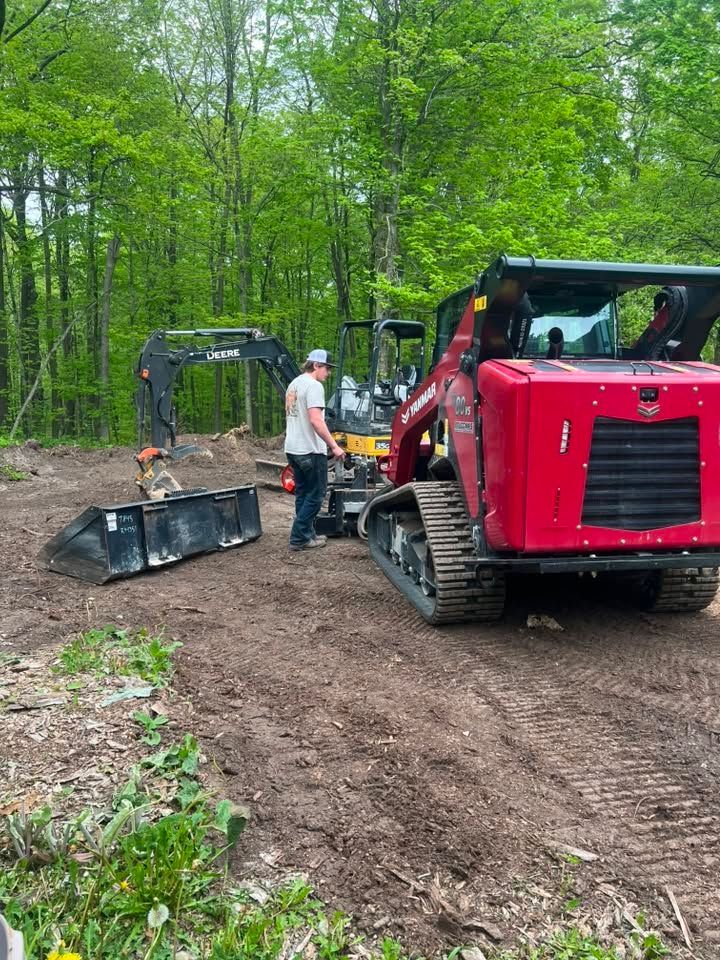
Kettle moraine terrain across western Sheboygan County delivers irregular subsurface conditions—glacial till, buried rock, and clay pockets that shift excavation plans mid-job. Schmitt Land Management LLC handles small excavation work across Random Lake and the Lakeshore region, using right-sized equipment for tight residential access and rural parcels where overdig damages surrounding lawn, landscape, or drainage patterns. Work includes site prep for building pads, driveway cuts, utility trenches, and drainage grading on properties where subsurface conditions require local knowledge to avoid delays or costly rework.
Small excavation involves targeted digging matched to your project scope—shallow trenches for drainage tile, deeper cuts for footings or utility runs, and graded pads for sheds, garages, or driveway extensions. Equipment size is selected based on access width, dig depth, and soil type so the job gets done without tearing up areas outside the work zone. Across rural Highway 57 corridors, Cascade, and Adell, moraine subsurface layers mean hitting rock or dense clay mid-dig isn't unusual, and adapting on-site keeps projects moving.
Schedule an on-site consultation to review dig depth, access routes, and subsurface expectations for your parcel.
How Moraine Terrain Affects Digging Plans
Excavation in kettle moraine areas often encounters buried rock, clay lenses, or sand pockets within the same trench—conditions that require adjusting dig method, equipment, or grading approach as the work progresses. Right-sized equipment prevents overdig damage, compacts soil less during access, and maneuvers through residential side yards or rural fence lines without widening the disturbed area beyond what's necessary for the actual cut.
After excavation, you'll see clean trench walls or pad grades at the specified depth, spoil piles staged for backfill or haul-away, and minimal disturbance to surrounding turf or landscape. Schmitt Land Management LLC works with direct familiarity across Sheboygan County's challenging subsurface conditions, adjusting dig sequencing when rock or clay requires breaking, sloping, or dewatering that wasn't visible from surface inspection.
Excavation doesn't include backfill material supply unless specified—trenches are dug and left open for inspection, utility installation, or gravel placement by others. Some jobs require spoil hauled off-site if clay content or rock mix makes it unsuitable for backfill, while other projects reuse excavated material for berms, fill, or rough grading elsewhere on the property. Utility clearance and permit responsibility remain with the property owner unless arranged otherwise before work begins.
Common Questions About This Service
Excavation questions often focus on subsurface conditions, equipment access, and what happens to the material that comes out of the ground.
What size projects qualify as small excavation?
Work includes residential drainage trenches, utility runs, driveway cuts, small building pads, and site prep for sheds or additions—projects where a full-size excavator or backhoe would overdig or damage surrounding areas. Equipment is matched to dig depth, access width, and soil type.
Why does subsurface rock or clay matter in Random Lake excavation work?
Sheboygan County's kettle moraine terrain includes glacial deposits with irregular rock and clay layers that aren't visible from the surface. Hitting rock mid-trench may require breaking or alternate routing, and clay pockets affect drainage, compaction, and backfill suitability.
What happens to the dirt that gets dug out?
Spoil material is staged on-site for backfill, rough grading, or berm creation unless it's mostly rock or clay unsuitable for reuse. If you don't want spoil left on your property, haul-away can be arranged but affects project cost and timeline.
How do you avoid damaging my lawn or landscape during excavation?
Right-sized equipment limits the footprint, access routes are planned to avoid planted beds or irrigation lines, and tracked machines distribute weight better than wheeled loaders on soft ground. Some turf damage is unavoidable where equipment travels repeatedly, but minimizing access width reduces restoration work after the dig is complete.
When should I schedule excavation if I'm building or installing utilities?
Dig after site clearing and layout are complete but before any pouring, paving, or finish grading begins. Excavating too early risks trench collapse or erosion from weather, while digging too late may require working around completed landscape or hardscape that limits equipment access.
Schmitt Land Management LLC operates locally with responsive scheduling across the Lakeshore region. Request a property visit to review dig scope, access constraints, and subsurface conditions specific to your parcel.