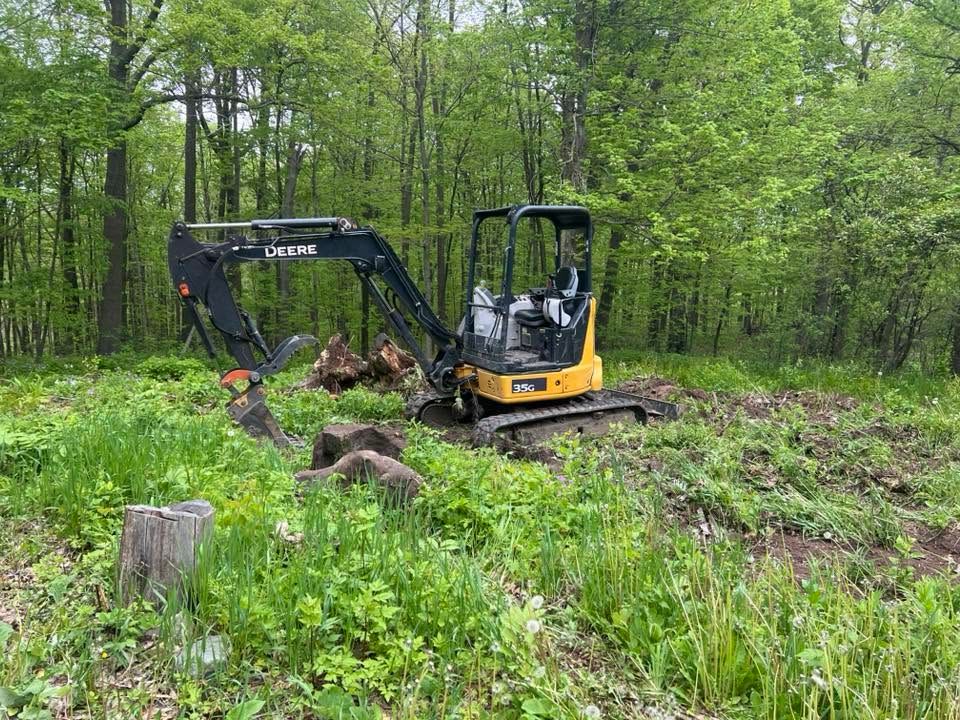

Stumps Removed Before They Push Back Up
Stump Grinding in Random Lake for stumps and root crowns that frost heave cycles push back through lawns and driveways
Wisconsin's frost heave cycles push old stumps and surface root crowns upward through spring thaw, creating tripping hazards and lawn obstacles across Random Lake Village, Cedar Grove, and residential properties throughout Sheboygan County. Stump grinding eliminates those hazards by mechanically grinding stumps and root crowns below grade, leaving ground ready for lawn fill, landscaping, or construction prep. Grinding depth is matched to what you're planning—shallow for lawn seeding, deeper for concrete pads or driveways where subsurface interference can't be tolerated.
Schmitt Land Management LLC grinds stumps across residential yards and rural fence rows, working with equipment sized for the job and terrain. Grinding removes the stump several inches below final grade, turning wood into mulch that fills the void or gets cleared depending on your preference. In Sheboygan County, frost action and clay-heavy soil mean stumps left near the surface will migrate upward seasonally, so grinding depth matters for long-term results.
Arrange a site evaluation to confirm stump locations, diameters, and the depth required for your intended use.
What Proper Grinding Depth Requires
Grinding depth depends on what's going over the stump site—lawn seeding tolerates four to six inches of grinding below grade, but a poured slab or paver base needs stumps removed deeper to prevent settling or root decay voids under the surface. The grinder cuts through the stump and surface roots in passes, reducing wood to chips that either backfill the hole or get hauled away based on your grading plan.
After grinding, you'll see a clean depression filled with wood chips, no stump protruding above grade, and no root crown left to resprout or heave upward during freeze-thaw cycles. Sites across Random Lake and surrounding areas often involve clay subsurface layers that hold moisture and amplify frost movement, making thorough grinding critical for stumps near driveways, walkways, or lawn edges where heaving creates visible damage.
Grinding doesn't remove the entire root system—lateral roots remain underground and decay over time. For most residential applications, that's not an issue, but if you're excavating for utilities or footings near the old stump site, expect to encounter remaining root structure. Some property owners choose to leave chips on-site as mulch, while others prefer clean fill dirt over the void for immediate seeding or sod installation.
Answers to Frequent Service Questions
Stump grinding questions typically focus on depth, debris, and how the work affects surrounding landscape.
How deep does stump grinding go?
Depth is matched to your intended use—four to six inches below grade works for lawn seeding, while concrete pads or driveways may require eight to twelve inches to prevent settling as the stump decays. The grinder cuts through surface roots and reduces the stump to chips, leaving no aboveground obstacle.
What happens to the wood chips after grinding?
Chips can backfill the stump void, spread as mulch elsewhere on your property, or be hauled away if you prefer clean soil fill for seeding. Most residential jobs leave chips on-site unless grading or construction requires a clean void filled with compactable material.
Why do stumps push back up after winter in Random Lake?
Sheboygan County's freeze-thaw cycles cause frost heave in clay-heavy soil, lifting stumps and root crowns that weren't ground deep enough or were left partially exposed. Grinding below the frost line or final grade prevents seasonal upward movement and keeps lawn surfaces level.
Can grinding damage nearby trees or landscape?
Grinders work in a controlled radius around the stump, but surface roots from nearby trees may extend into the grinding zone. If roots from a living tree are hit, minor damage occurs but rarely threatens the tree's health unless the root is a major structural anchor.
When should I grind stumps if I'm planning new landscaping or construction?
Grind before any grading, seeding, or foundation work begins so the site is level and free of subsurface obstructions. Grinding after construction risks equipment access damage to finished grades or utilities, and grinding after landscaping means replanting or repairing areas disturbed by the grinder.
Schmitt Land Management LLC operates locally with familiarity across Sheboygan County terrain and soil conditions. Contact the operator directly to confirm stump count, access requirements, and depth specifications for your property.